Dairy-free Thai food is a practical choice for downtown Toronto diners because many Thai dishes get richness from coconut milk, herbs, aromatics, rice noodles, and stir-fry sauces instead of dairy cream or cheese. Still, “dairy-free” is only one dietary term. It does not tell the kitchen whether someone is vegan, vegetarian, gluten-free, nut-free, shellfish-free, or avoiding cross-contact.
For a quick next step, view our Thai menu or view our dairy-free catering menu. For catering, group orders, and office lunches near 175 Dundas St W, contact Evergreen Thai with the guest count, timing, and dietary notes before finalizing your order.
What dairy-free means at a Thai restaurant
Dairy-free means no dairy milk, cream, butter, cheese, or yogurt. It does not mean the dish is automatically plant-based. A Thai dish can be dairy-free and still include chicken, beef, shrimp, egg, fish sauce, oyster sauce, or shrimp paste.
That distinction matters for teams ordering lunch in downtown Toronto. One guest may say “dairy-free” because they are lactose intolerant. Another may say it because they are vegan. A third may be avoiding dairy for allergy reasons and may care about shared preparation. Those three guests need different conversations even though they all use the same first label.
At Evergreen Thai, our main Thai dishes and catering dishes are dairy-free in the sense that Thai cooking does not rely on dairy milk, cream, butter, or cheese for the core savory menu. Please confirm dessert and allergy-related requests with our team, especially for items such as ice cream, special add-ons, or strict allergy needs.
Evergreen Thai at 175 Dundas St W and VegeDelight next door at 173 Dundas St W work together to support Thai, Chinese, vegetarian, vegan, and mixed-diet group meals in downtown Toronto. That pairing is useful when one group includes dairy-free diners, vegetarians, vegans, and guests who simply want familiar Thai food.
Why Thai food often works for dairy-free diners
Many downtown office lunch defaults rely on cheese, cream sauces, buttered bread, creamy dressings, or dairy-heavy desserts. Thai food starts from a different foundation: rice, rice noodles, coconut milk, vegetables, basil, lemongrass, chili, lime, peanuts, tofu, chicken, beef, and seafood.
That makes dairy-free planning easier, especially when an office admin needs a warm meal that still feels substantial. Curries are usually coconut-milk-based. Pad Thai and many noodle dishes use rice noodles rather than wheat pasta with cheese sauce. Fried rice and stir-fries are usually built around rice, vegetables, protein, and wok sauces rather than butter or cream.
The practical question is not only “is there dairy?” It is also “what else matters to this guest?” Dairy-free diners who eat meat may be comfortable with chicken curry or beef stir-fry. Vegan diners need no animal-derived ingredients. Vegetarian diners avoid meat but may still eat egg or dairy. Gluten-free diners need a different review of sauces and noodles.
For curry details, read Is Thai Curry Dairy-Free?. For noodles, read Dairy-Free Pad Thai and Thai Noodles in Toronto.
How to use the menu without over-assuming
If you are ordering from the restaurant menu, start with the savory Thai dishes and confirm any dessert or allergy-related questions before ordering. The safer wording is: our Thai dishes do not use dairy milk, cream, butter, or cheese as the core cooking base. That is different from promising that every single menu item, add-on, dessert, or special is dairy-free.
For most dairy-free diners, good starting points include curries, rice dishes, stir-fried noodles, and wok dishes. If someone is also gluten-free, vegetarian, vegan, nut-free, or shellfish-allergic, collect that information separately. A dairy-free Pad Thai may still contain egg or fish sauce. A dairy-free curry may still use curry paste with shrimp paste. A dairy-free fried rice may still contain egg.
Use these questions when ordering:
- Is the request dairy-free only, or also vegan or vegetarian?
- Are eggs acceptable?
- Are fish sauce, oyster sauce, or shrimp paste acceptable?
- Is gluten-free needed?
- Are nuts, shellfish, soy, or other allergies involved?
- Does shared kitchen preparation matter?
Please tell us about any allergies or strict dietary requirements before ordering. All food is prepared in a shared kitchen, so we cannot guarantee zero cross-contact.
Dairy-free planning for office lunches and catering
For office lunches, dairy-free Thai food works best when the organizer shares dietary notes in writing before the order is prepared. Instead of writing “1 dairy-free” only, write “1 dairy-free, eats chicken, no cheese/cream/butter, no other restrictions” or “1 vegan, no animal-derived ingredients.” That gives the kitchen a usable instruction.
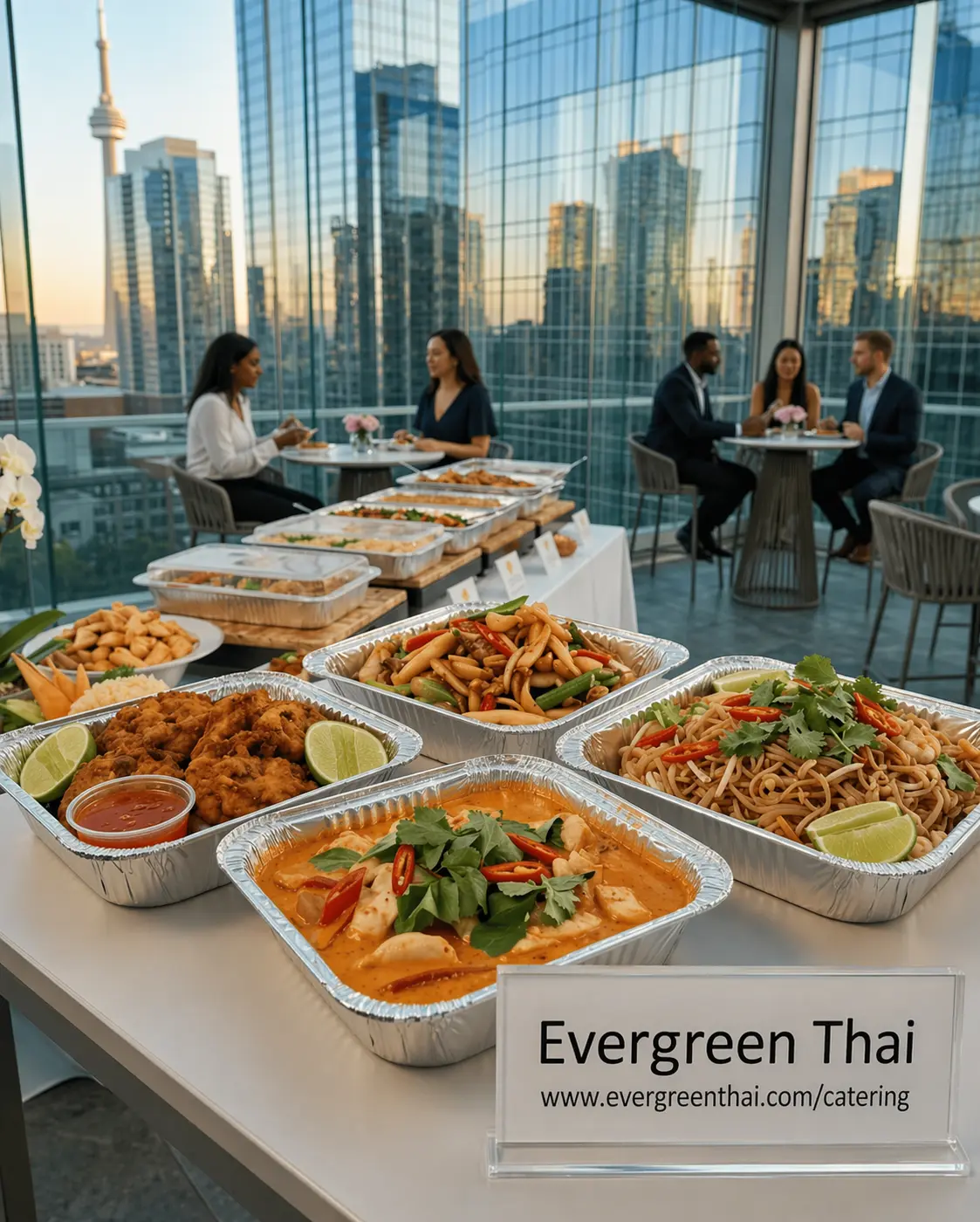
For larger groups, view our dairy-free catering menu and build the order around familiar anchors: curry, rice, noodles, and stir-fry trays. If the group includes vegan or vegetarian guests, consider adding VegeDelight options next door so plant-based diners have more than one small side dish.
If the order is for a boardroom lunch, training day, hospital team, university group, or downtown office event, use the catering form and include timing, headcount, spice tolerance, delivery notes, and dietary details. The earlier the team sees the notes, the easier it is to recommend a tray mix that feels safe, fresh, and practical.
For more planning help, read Dairy-Free Thai Catering Downtown Toronto and Dairy-Free Office Lunch Ideas in Downtown Toronto.
Dairy-free, vegan, and vegetarian are not the same
The most common ordering mistake is treating dairy-free, vegan, and vegetarian as interchangeable. They overlap, but they are not the same.
Dairy-free means no dairy milk, cream, butter, cheese, or yogurt. Vegan means no animal-derived ingredients. Vegetarian means no meat, but may still include egg or dairy. In Thai food, the hidden questions often involve fish sauce, oyster sauce, shrimp paste, egg, and shared cooking surfaces rather than dairy.
For a mixed group, the best approach is to collect exact exclusions:
- Dairy-free: no milk, cream, butter, cheese, yogurt
- Vegan: no animal-derived ingredients
- Vegetarian: no meat, but confirm egg, dairy, fish sauce, and shrimp paste
- Gluten-free: confirm noodles, sauces, and preparation
- Allergy-aware: discuss cross-contact directly
For a deeper comparison, read Dairy-Free vs Vegan vs Vegetarian Thai Food.
Next step: choose the ordering path
If you are deciding for yourself, view our Thai menu and call with any dessert or allergy questions before ordering. If you are planning for a workplace or event, view our dairy-free catering menu and send dietary notes with the request.
For catering, contact Evergreen Thai for headcount, timing, delivery details, and dietary planning. A short note before the order is more useful than trying to solve every dietary detail at pickup.