
Why no onion no garlic requests go wrong
No onion no garlic requests fail because the alliums are already in the food before the cook picks up the wok. Removing them at the moment of cooking does nothing when the curry paste, the stock, or the stir-fry sauce was made with them hours or days earlier.
Where onion and garlic hide in a Thai or Chinese kitchen:
- Curry pastes for Green, Red, Panang, and Massaman Curry, which are built on garlic and shallots
- Soup stocks and broths, including the base for Tom Yum and Tom Kha
- Stir-fry sauces and marinades
- Dumpling and spring roll fillings
- Dipping sauces and dressings, including the sauce served with fresh rolls
- Cooking oil that has already been used for a garlic dish that shift
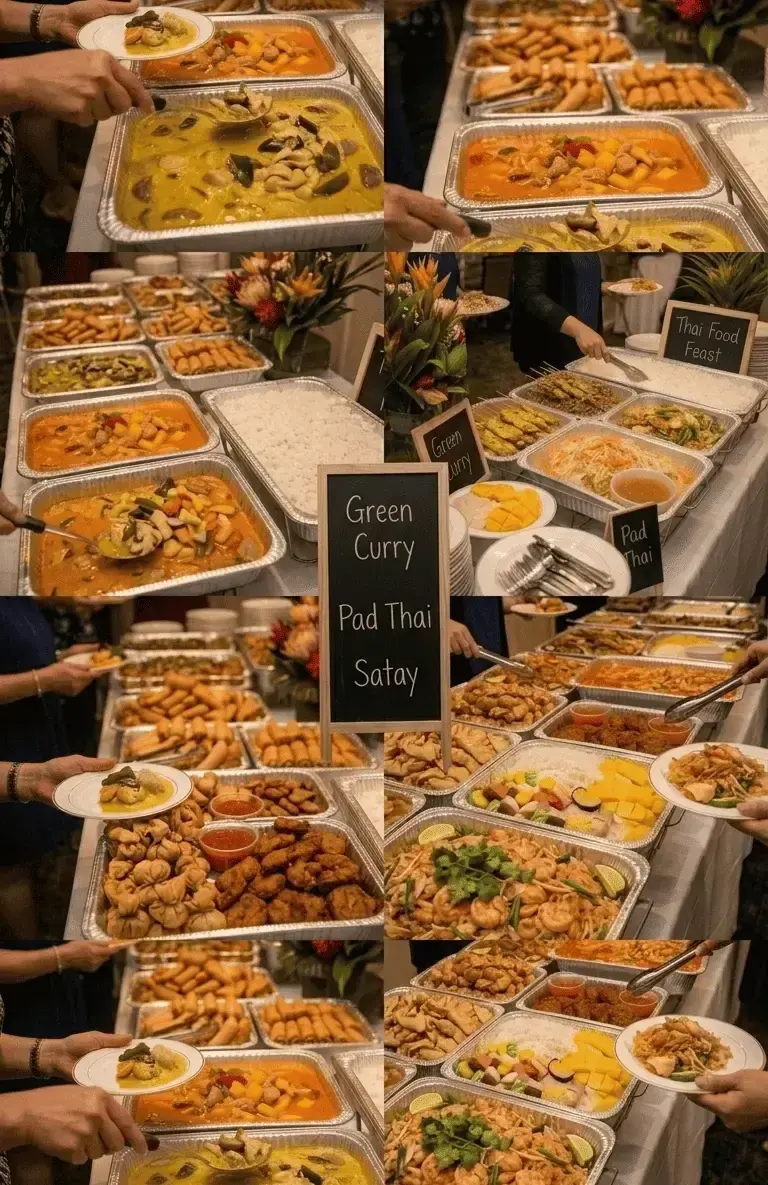
For a single diner that means one conversation. For a group it means the party trays in Toronto need a separately cooked, separately labelled tray rather than a promise that the shared buffet is safe. Many downtown guests follow no onion no garlic practice for Jain, Vaishnav, sattvic, or Buddhist reasons, and the rules differ between families, so the kitchen confirms specifics with each diner. Evergreen Thai Kitchen & Bar has cooked these requests for downtown offices, campus groups, and families near Dundas and University since 2007, and the honest position is simple: the kitchen prepares these dishes on request, cooks them separately, and cannot guarantee a fully separate kitchen.
What to say when ordering
Name each ingredient individually; a generic “no onion or garlic” tag is not enough. The most reliable order note reads: “No onion, no garlic, no leek, no scallion, no chive, no asafoetida, including in sauces, pastes, stocks, and marinades.”
Put these lines in the order notes or say them on the phone:
- “No onion, garlic, leek, scallion, or chive, including in sauces, pastes, stock, and marinades.”
- “Please cook from scratch in a clean pan if the pre-made base contains alliums.”
- “Please confirm the oil has not been used with garlic earlier in the shift.”
- “This is for strict religious observance,” or “this is a medical allergy,” so the team plans accordingly.
- “Please flag any ingredient the diner should ask about,” which lets the kitchen raise things like shrimp paste or egg that the diner may not have listed.
Add the other rules that travel with these practices: no egg, no honey, no root vegetables, no grains on a fasting day, no mushrooms for some sattvic diets, and no fish sauce or oyster sauce, both of which exist in a Thai kitchen. The 30 second conversation at the start of the order is what separates a clean plate from a returned one. For office admins collecting this for a colleague, ask the diner to write their rules down and forward the message unedited; the intake legend in the vegetarian catering guide for downtown Toronto offices shows how to log it alongside vegetarian and vegan counts.
What the Thai kitchen can and cannot adjust
Evergreen Thai can prepare some vegetable and tofu dishes without onion or garlic when asked 24 to 48 hours ahead, but not every Thai dish can be adjusted. Thai cooking uses garlic and shallots heavily in curry pastes and stir-fry bases, so the curries and most sauced noodles stay off the list for strict observance.
What can typically be prepared without alliums on request:
- Stir-fried mixed vegetables with tofu, cooked in a clean pan without garlic or shallot
- Plain steamed vegetables with light seasoning
- Golden Tofu or simple pan-fried tofu, with the dipping sauce confirmed or left off
- Steamed jasmine rice as the base
- Fresh vegetable rolls, with the dipping sauce confirmed or replaced
- Some clear vegetable broths in simple preparation
What usually cannot be adjusted for strict observance: Green, Red, Panang, and Massaman Curry (the paste), Pad Thai and Drunken Noodles as normally sauced, Tom Yum and Tom Kha on the standard stock, and Spring Rolls with the standard filling. Ask anyway; the team will say which dishes are realistic that day rather than guess. Browse the Evergreen Thai menu before calling so the conversation is about specific dishes, and treat every answer as a description of preparation, not a certification.
Vegedelight and no five pungent vegetables
Vegedelight, the fully vegetarian Chinese and Thai sister restaurant next door at 173 Dundas St W, is often the better fit for no onion no garlic dining. Chinese Buddhist vegetarian cooking routinely works without the five pungent vegetables (onion, garlic, leek, scallion, chive), so the kitchen handles these requests more often than a general Thai restaurant does.
Vegedelight dishes that often work for allium-free diners, with confirmation:
- Chinese vegetable stir-fries prepared without alliums
- Tofu and mushroom dishes in simple preparation
- Steamed vegetable plates
- Vegetable claypot and stewed dishes
- Plain rice and noodle bases
- Plant-based protein dishes cooked simply
Not every Vegedelight dish is automatically allium-free, and the same call-ahead rule applies. For observers who follow the Buddhist form of this practice, including on Vesak and temple days, the guide to Buddhist vegetarian food in Toronto covers the no five pungent vegetables convention in more depth. For mixed groups, the practical setup is one coordinated order from the same Dundas block: a strict allium-free layer from Vegedelight, Thai vegetable dishes for everyone else from Evergreen Thai, and one delivery.
Jain meals and Paryushan
Jain dietary practice is the most specific of any covered here, and Evergreen Thai is not a Jain-certified kitchen. Many Jain diners avoid root vegetables (potato, onion, garlic, carrot, beet, ginger), eggs, honey, and fermented foods, and rules differ between Shvetambara and Digambara traditions and between families. During Paryushan, the annual period of reflection that usually falls in August or September, observance tightens further and many families prefer home-prepared food or a dedicated Jain kitchen.
What the restaurant conversation should cover, ingredient by ingredient:
- Are any root vegetables, onion, garlic, or ginger used in this dish, including in the sauce?
- Are eggs, honey, or fermented ingredients used?
- What oil is used, and is it shared with other dishes?
- Can the dish be made with above-ground vegetables only, in a clean pan?
- When is the dish cooked, in case after-sunset eating rules apply?
Dishes that can be discussed, not recommended as Paryushan-safe: plain stir-fried above-ground vegetables, simply prepared tofu, steamed jasmine rice, and fresh rolls with above-ground vegetables only. The kitchen can describe exactly how each is cooked; it cannot confirm suitability for any observance. For an office ordering for a Jain teammate during Paryushan, have the teammate join the call, allow 5 to 7 days, and order a separately cooked plate rather than a shared tray. The final decision sits with the observer.
Sattvic cooking requests
A sattvic meal is fresh, mildly spiced, vegetarian, and cooked without onion and garlic, and many diners following yoga, Vaishnav, or ayurvedic practice ask for it year-round rather than only on fasting days. Some sattvic diets also avoid mushrooms, very hot chili, fermented foods, and anything cooked the day before.
How that maps to a Thai order:
- Mild only: no chili in the dish, with tamarind, lime, coconut milk, and herbs carrying the flavour
- Fresh-cooked: dishes cooked to order rather than held, which is how the kitchen works for group trays anyway
- No onion, garlic, or shallot in the pan or the sauce, cooked separately
- No mushrooms if the diner excludes them; say so, because mushrooms are a common tofu-dish pairing
- No fish sauce or oyster sauce, replaced with a plain soy or salt seasoning on request
- Coconut milk stays, since it is plant-based and dairy-free
The practical sattvic plate from Evergreen Thai is steamed vegetables or a clean-pan vegetable and tofu stir-fry over jasmine rice, mild, with no sauce from the standard bases. Vegedelight’s simply prepared vegetable and tofu dishes are the wider menu for the same request. Say “sattvic, no onion, no garlic, mild, fresh-cooked” and list any extra exclusions in writing.
Ekadashi meals
Ekadashi falls twice every lunar month, and many Vaishnav diners mark it with one simple vegetarian meal cooked without onion and garlic, sometimes without grains and beans as well. Practices range from ordinary vegetarian eating to a strict phalahar day of fruit, certain vegetables, and dairy, so the safest planning step is asking the diner what they avoid that day.
Restrictions an office may encounter on Ekadashi:
- vegetarian only, with no egg
- no onion, no garlic
- no grains (rice, wheat, lentils) for some observers
- no beans or legumes for some observers
- one meal per day, or specific cooking oil preferences
A practical single plate: one vegetable and tofu stir-fry cooked without onion and garlic, plain steamed vegetables on the side, jasmine rice included or omitted depending on the grain rule, and a plain drink rather than a pre-mixed one. If grains are out, the order leans to vegetable and tofu plates rather than Pad Thai or fried rice, and the kitchen should confirm that no starch-thickened sauce is used. Keep the Ekadashi plate separate and labelled even when the rest of the team is eating regular vegetarian trays; a shared serving spoon undoes the preparation. Book 24 to 48 hours ahead for a single meal and 3 to 5 days for a group.
Navratri office lunches and group orders
Navratri, the nine-night festival observed in autumn (Sharad Navratri) and again in spring (Chaitra Navratri), is when downtown offices most often need a no onion no garlic group order. Some colleagues keep full vrat fasting rules, some eat a simpler vegetarian week, and many ask only for no onion and no garlic; most caterers cannot tell the difference, so the organizer has to.
Collect from each diner 3 to 5 days ahead: vegetarian only, no onion no garlic, no egg, any grain exclusion, and spice preference. Then build two layers rather than one:
- Strict layer: one large tray vegetable and tofu stir-fry cooked without onion and garlic, one tray steamed vegetables, and a separately cooked jasmine rice
- Regular vegetarian layer: Vegetable Pad Thai, Mixed Vegetable Curry with tofu, and Spring Rolls for non-observing colleagues
- Optional Chinese layer from Vegedelight: an allium-free vegetable stir-fry and tofu-mushroom dish for a bigger strict selection
That structure feeds 15 to 25 colleagues without doubling the cost or the prep. Label the strict trays “No onion, no garlic” and “Mild” so observing guests self-serve without asking; mixed-up trays at the buffet are the most common Navratri complaint. Lead times run 3 to 5 days for 10 to 25 people and 5 to 7 days for 30 or more, with a 15 to 20 minute buffer for tower lobbies near Yonge-Dundas, City Hall, and University Ave. Navratri planning pairs naturally with the autumn festival calendar; the guide to vegetarian catering for Diwali and other observance days covers the weeks that follow.
Office, family, and festival orders: keep the strict plate separate
For any group setting, a separately cooked and labelled portion beats identifying safe dishes on a shared buffet, because serving spoons and steam trays move trace amounts between dishes. That rule holds for a single Ekadashi plate in a 20 person office lunch and for a 40 person Navratri gathering alike.
Practical setup by scenario:
- Solo order: call 24 to 48 hours ahead and name each ingredient to avoid.
- Office colleague: ask the diner for their rules in writing and forward them unedited.
- Family meal: order a dedicated portion, not a safe share from the family trays.
- Group catering: one strict tray or box set with its own utensils, labelled “No onion, no garlic, no allium”.
- Religious practice: say “strict observance”; for a medical allergy, say “allergy”.
Group orders over CAD 200 within 5 km of 175 Dundas St W are delivered directly, and anything serving 10 or more people should go through the catering quote path so the strict layer is planned with the rest of the order. Evergreen Thai has run this from the same downtown kitchen since 2007, and the promise is honest: allium-free dishes cooked separately on request, with preparation described plainly and the observer making the final call. Send the exclusion list, headcount, and date to get a catering quote, or call +1 416-581-8668 to talk through the dishes before you book.