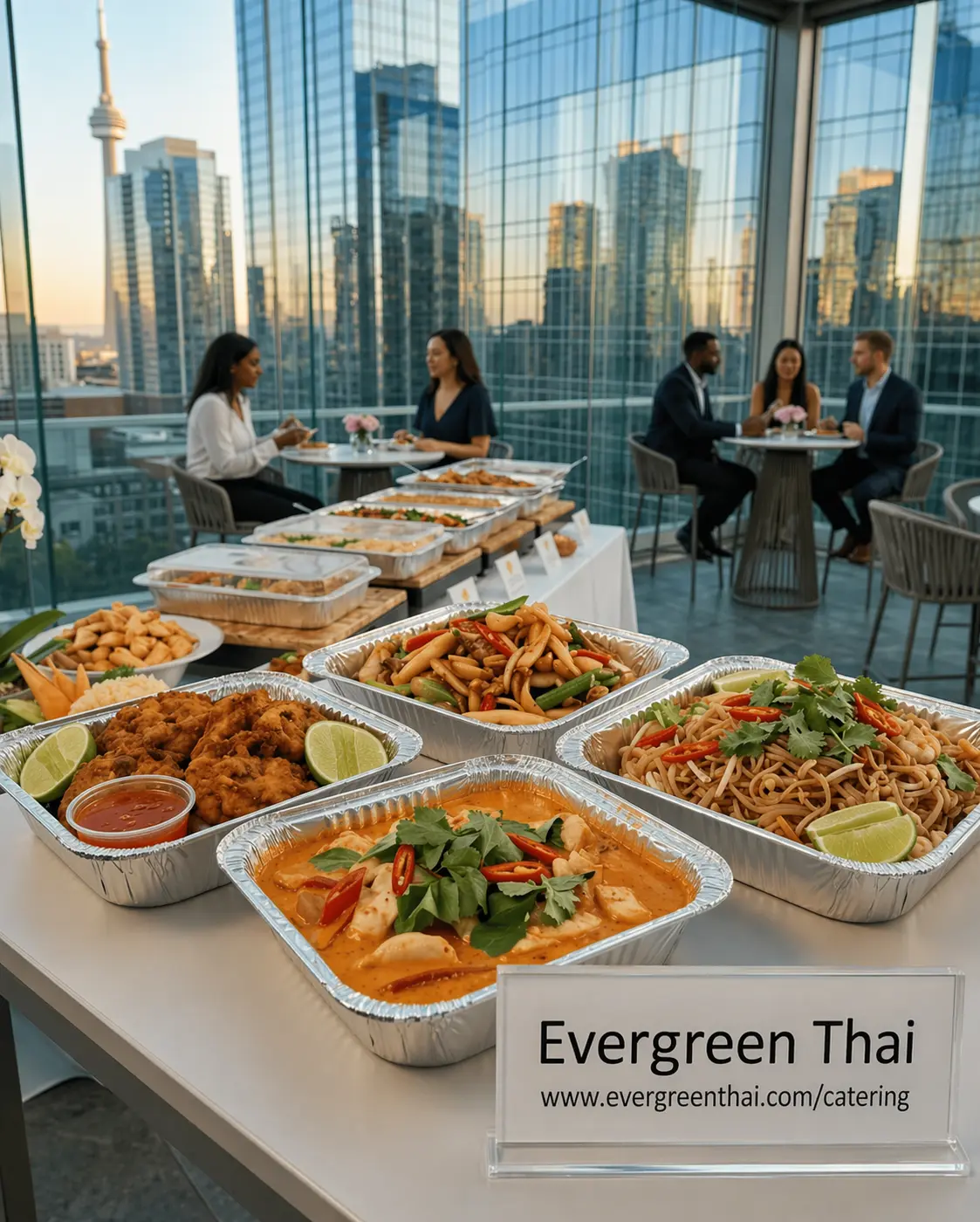
How to Order Vegetarian and Non-Vegetarian Catering Together should solve a real downtown Toronto buying problem: how to get group meals delivered reliably to busy offices, schools, condos, and event spaces without compromising heat, timing, or dietary confidence.
Evergreen Thai operates from 175 Dundas St W in the downtown core. That location is close to City Hall, Financial District towers, PATH-connected buildings, TMU, UofT, hospitals, and Union Station. Shorter travel routes usually improve timing predictability and help food reach teams in better condition.
What Makes Downtown Toronto Catering Different
Downtown catering is an operations challenge first. Typical friction points include lobby security, concierge handoff, elevator wait times, limited loading access, and narrow lunch windows around 11:45 a.m. to 1:00 p.m.
If these conditions are ignored, even strong menus underperform. If these are planned early, teams experience smoother service and less internal coordination stress.
Planning Framework You Can Reuse
Use one standardized planning flow for every order:
- Confirm headcount range and attendance risk.
- Consolidate dietary notes in one message.
- Decide service format: shared trays, mixed setup, or packaged add-ons.
- Validate building details: entrance, floor, handoff contact, backup phone.
- Confirm room-ready time and setup surface.
- Keep one owner responsible for day-of communication.
This structure is simple, but it prevents most preventable downtown failures.
Mixed-Diet Menu Architecture
In office groups, vegetarian coverage should be a core part of the menu, not an afterthought. A reliable format is one vegetarian anchor tray, one protein-forward tray, one starch base, and one lighter side.
This makes serving more inclusive and avoids the common complaint that vegetarian attendees only get side dishes.
For dietary confidence, summarize egg, dairy, nut, and spice sensitivity in your notes and request clear labels where needed.
Toronto Scenario Matrix
Choose the scenario that matches your event, then plan accordingly:
- Boardroom lunch: prioritize exact room-ready time and clean shared setup.
- Team workshop: prioritize easy self-serve flow and portion stability.
- Hybrid anchor day: prioritize mixed preferences and faster reset between sessions.
- Campus or condo event: prioritize handoff clarity and practical tray formats.
Different contexts need different tray emphasis, but all benefit from early logistics confirmation.
Quality Control and Post-Event Review
After each order, capture a short debrief:
- on-time room readiness
- dietary fit confidence
- leftovers ratio versus attendance
- comments on labeling and serving flow
This creates a repeatable quality baseline and improves future ordering speed.
Internal Links for Deeper Planning
- Vegetarian Catering Guide
- How to Order Catering With Dietary Restrictions
- Catering Service Page
- Catering Quote Form
- Downtown Toronto Catering Guide
Final Takeaway
High-quality downtown catering is not about adding more dishes. It is about aligning menu structure, delivery logistics, and event timing. When those three pieces are aligned, teams get a hotter meal, a smoother handoff, and a better overall experience.