
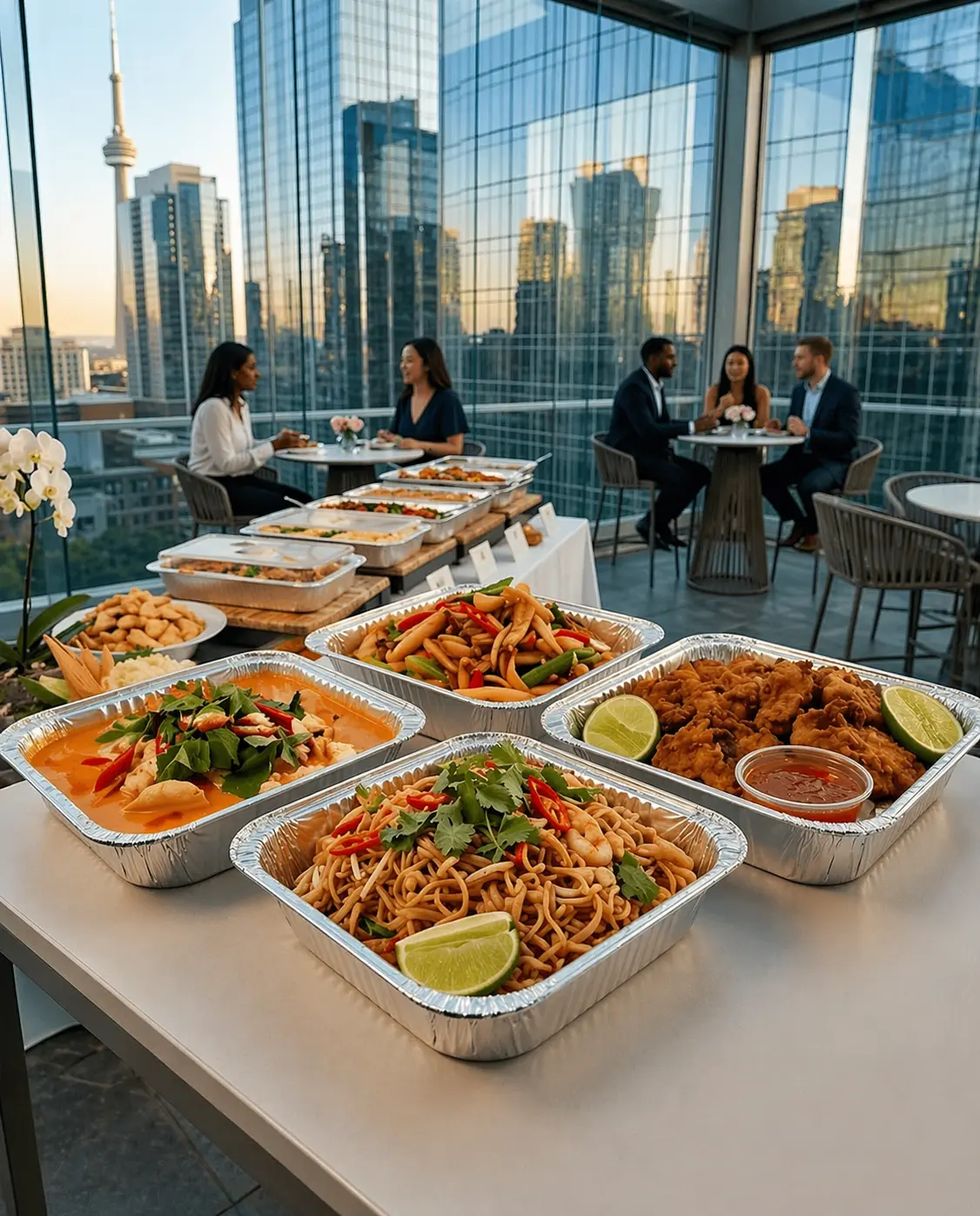
Most dietary mistakes in group catering happen before food is selected. They happen when information is incomplete, unclear, or collected too late.
If your team includes vegetarian, vegan, no-egg, no-dairy, nut-sensitive, or spice-sensitive preferences, a stronger process can reduce risk and make the event feel more inclusive.
Collect dietary data early and consistently
Use one short intake form or message template to gather:
- dietary preference type
- allergy or intolerance notes
- severity guidance where relevant
- optional spice tolerance
Do not rely on verbal summaries passed between multiple people.
Translate preferences into menu roles
After collection, convert dietary notes into menu planning roles:
- core vegetarian/vegan-safe mains
- shared mixed-group bridges
- clearly labeled trays with relevant notes
This approach is more reliable than ordering “a few special dishes” on the side.
Why ingredient transparency matters
Organizers need confidence when presenting food to colleagues. Clear ingredient notes reduce uncertainty and improve decision speed.
This is one reason ingredient-focused vegetarian planning can outperform generic catering menus in mixed offices.
Related reading: Why ingredient details matter for office catering orders.
Balance inclusion with practicality
You do not need a separate meal for every guest. You need enough clearly planned options so everyone can build a plate confidently.
A practical mixed-group structure usually includes:
- substantial vegetarian coverage
- one to two broad-appeal non-vegetarian mains (if needed)
- clear labels and serving flow
Confirm operational details before event day
Dietary planning fails when handoff logistics are ignored.
Before finalizing:
- confirm delivery window
- confirm onsite receiver/contact
- confirm serving location and timing
- confirm labeling expectations
For downtown tower and campus setups, these details are often as important as menu choice.
Pair with proven planning guides
- Vegetarian office lunch for mixed teams
- Mixed dietary preference catering downtown
- Gluten-free catering options downtown Toronto
Final thought
Dietary-restriction catering works when communication quality is high. Collect accurate data early, design trays around shared reality, and confirm logistics before service day.
If your team has complex restrictions, use the catering quote form and include dietary notes in your request so planning can start with the right assumptions.
Advanced mixed-diet planning model
High-performing mixed-group orders are built with role-based tray design, not ad-hoc substitutions:
- anchor trays: substantial vegetarian mains with real volume
- bridge trays: dishes that both vegetarian and non-vegetarian guests can share
- confidence layer: explicit ingredient notes for egg, dairy, nuts, spice sensitivity, and optional substitutions
KPI stack for dietary reliability
For recurring office and event orders, track:
- dietary confidence score from organizer feedback
- vegetarian tray depletion pattern vs expected usage
- post-event complaint rate linked to unclear ingredients
- reorder rate from mixed-diet teams
Failure modes to avoid
- treating vegetarian dishes as side-only coverage
- volume sized only to strict vegetarian headcount
- ambiguous ingredient communication in planning notes
- over-fragmented orders that reduce table cohesion
Internal path for deeper execution
Expert mixed-diet execution model
High-end mixed-group planning requires menu architecture, not ad-hoc substitutions. Design orders to maximize inclusion while preserving service simplicity.
Menu system design
- anchor trays: substantial vegetarian mains sized for crossover demand
- bridge trays: dishes that reduce segmentation between dietary groups
- confidence trays: clearly documented ingredients for sensitive planning contexts
KPI model for dietary performance
- dietary-confidence score from organizer feedback
- vegetarian depletion curve vs expected volume
- post-event dietary complaint rate
- reorder likelihood for mixed-group teams
Governance standards
- maintain consistent ingredient communication language
- avoid overpromising allergen certainty
- capture dietary notes in one canonical request channel