
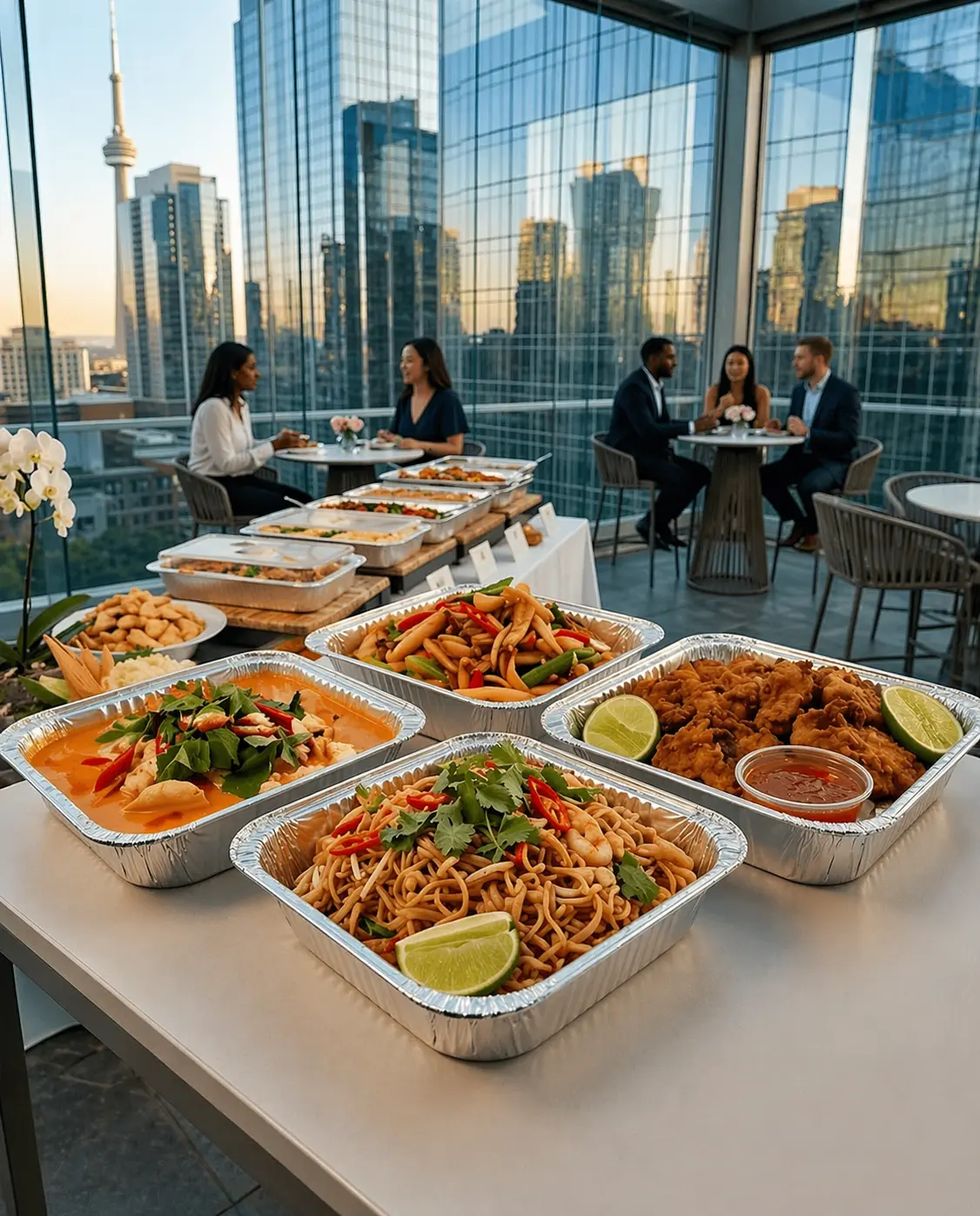
Vegetarian-friendly catering performs better when dishes are substantial enough to be shared by the whole group.
Mixed-diet team catering is usually a planning problem, not a menu-availability problem.
What mixed teams need most
Strong mixed-group orders typically include:
- substantial vegetarian mains, not side-only coverage
- one or more complementary non-vegetarian options
- clearer ingredient notes for planning confidence
- tray volumes that account for crossover sharing
Why this improves group experience
When vegetarian guests have real main options and ingredient notes are transparent, office admins have fewer complaints, less ordering anxiety, and better repeat-order confidence.
Evergreen Thai positioning for mixed groups
A practical advantage is being able to build one order with Thai favourites and dedicated vegetarian coverage, rather than forcing separate fragmented orders for the same event.
Related planning links
- Downtown Toronto catering master hub
- Financial District catering hub
- Street and building catering hub
- Catering main page
- Catering quote form
To plan a mixed-diet order, include vegetarian count, allergy notes, and serving format in quote form.
Advanced mixed-diet planning model
High-performing mixed-group orders are built with role-based tray design, not ad-hoc substitutions:
- anchor trays: substantial vegetarian mains with real volume
- bridge trays: dishes that both vegetarian and non-vegetarian guests can share
- confidence layer: explicit ingredient notes for egg, dairy, nuts, spice sensitivity, and optional substitutions
KPI stack for dietary reliability
For recurring office and event orders, track:
- dietary confidence score from organizer feedback
- vegetarian tray depletion pattern vs expected usage
- post-event complaint rate linked to unclear ingredients
- reorder rate from mixed-diet teams
Failure modes to avoid
- treating vegetarian dishes as side-only coverage
- volume sized only to strict vegetarian headcount
- ambiguous ingredient communication in planning notes
- over-fragmented orders that reduce table cohesion