
This article has been merged into a stronger primary guide: /blog/vegetarian-catering-in-downtown-toronto-a-practical-office-lunch-guide/
Mixed teams are now standard in downtown Toronto offices. A lunch order that ignores that reality usually creates avoidable friction.
The typical failure pattern is familiar: one large chicken tray, one small vegetarian tray, then confusion when both groups eat from the vegetarian side. The result is uneven coverage, weak host confidence, and a meal that feels less inclusive than intended.
This guide gives a practical way to build vegetarian office catering that still works for mixed preferences.
Define the goal: inclusion without menu sprawl
Your objective is not to satisfy every possible preference with separate meals. Your objective is to create a shared table where vegetarian diners feel fully covered and non-vegetarian diners still have familiar choices.
The most reliable structure is:
- two substantial vegetarian-friendly dishes
- one to two broad-appeal protein options
- one neutral base (rice/noodle) for flexibility
- one lighter vegetable-focused item
That balance usually performs better than over-segmenting the menu.
Use ordering inputs that matter
Before selecting dishes, lock these details:
- attendance estimate (not invitation count)
- hard dietary constraints
- service window (when people actually eat)
- room setup and handoff logistics
For organizer workflows, route directly to catering planning instead of trying to finalize everything from memory.
Why vegetarian-first framing helps mixed groups
When vegetarian dishes are positioned as part of the main order, the table feels more modern and inclusive. This also reduces risk for teams with rotating guests or last-minute dietary changes.
In downtown offices, mixed preferences are often dynamic by meeting. Building a resilient order template saves time across repeated lunches.
Pair vegetarian strategy with ingredient confidence
Menu confidence rises when organizers can explain what is in each dish.
That is where ingredient transparency and Vegedelight positioning create practical value. Instead of “we can do vegetarian,” you can communicate “we planned this as a mixed-group menu with clearly structured vegetarian coverage.”
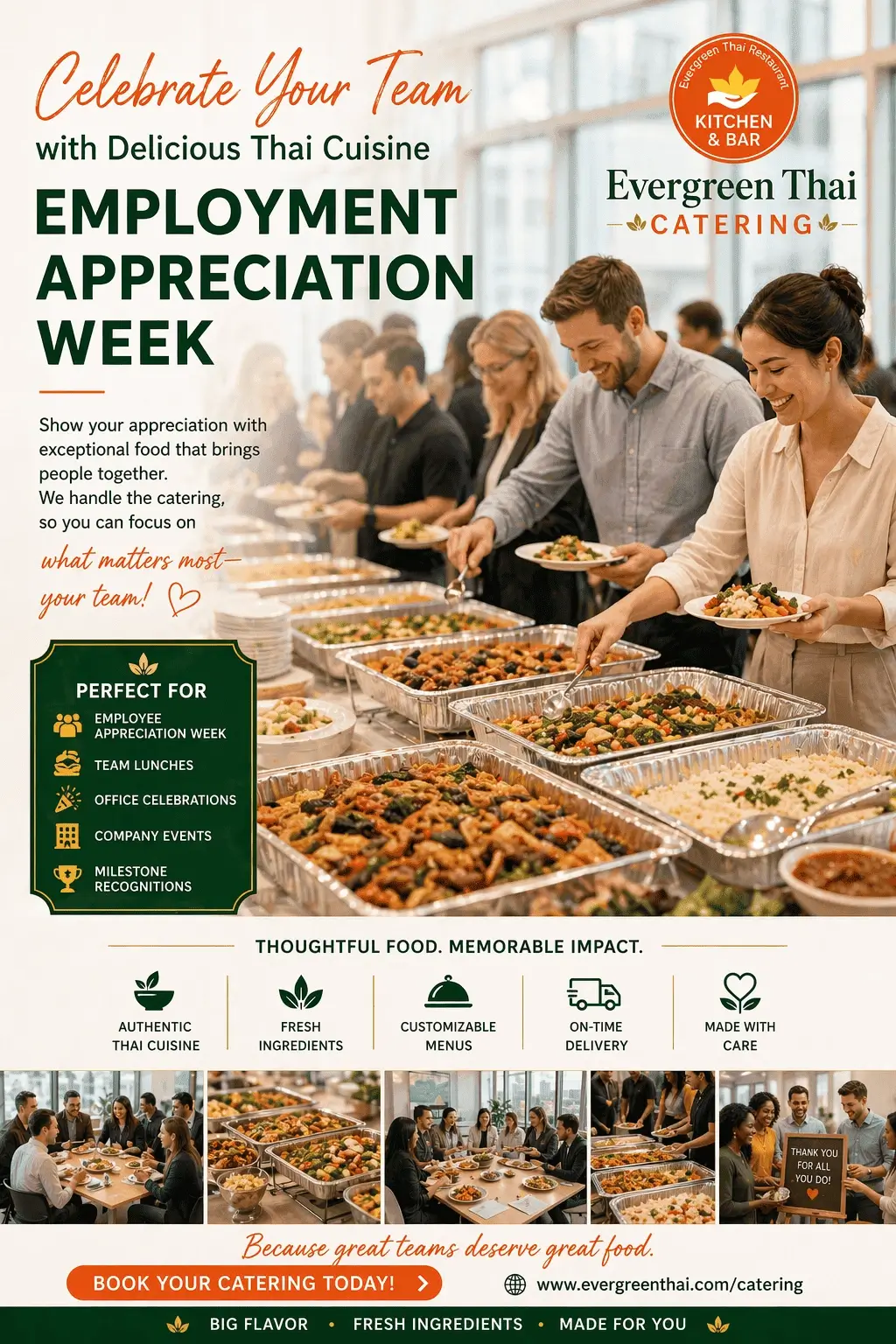
For context, review VegeDelight and Evergreen Thai for mixed groups and downtown mixed dietary catering.
Connect menu planning with budget logic
Mixed-team orders do not need premium complexity. They need sensible ratio planning.
If you are targeting a fixed budget, these references help:
Budget planning becomes easier when vegetarian and non-vegetarian trays are both treated as productivity tools, not special requests.
Practical checklist for office admins
Use this pre-order list:
- vegetarian headcount confirmed
- vegan/egg/dairy notes captured
- allergy flags highlighted clearly
- serving location and access details shared
- delivery contact and backup contact assigned
This checklist lowers operational stress far more than menu tweaking at the last minute.
Final thought
Vegetarian office lunch catering for mixed teams works when you design the order for real team behavior. Keep the menu balanced, keep dietary communication explicit, and keep logistics clear.
Helpful next reads:
- Office lunch catering downtown Toronto
- What to order for mixed vegetarian and chicken groups
- Gluten-free options for downtown groups
- Start your quote
Advanced mixed-diet planning model
High-performing mixed-group orders are built with role-based tray design, not ad-hoc substitutions:
- anchor trays: substantial vegetarian mains with real volume
- bridge trays: dishes that both vegetarian and non-vegetarian guests can share
- confidence layer: explicit ingredient notes for egg, dairy, nuts, spice sensitivity, and optional substitutions
KPI stack for dietary reliability
For recurring office and event orders, track:
- dietary confidence score from organizer feedback
- vegetarian tray depletion pattern vs expected usage
- post-event complaint rate linked to unclear ingredients
- reorder rate from mixed-diet teams
Failure modes to avoid
- treating vegetarian dishes as side-only coverage
- volume sized only to strict vegetarian headcount
- ambiguous ingredient communication in planning notes
- over-fragmented orders that reduce table cohesion