
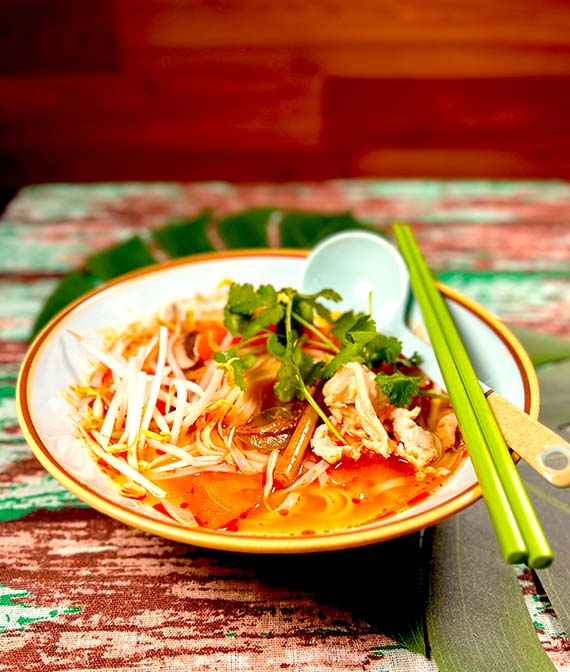
Party trays are popular because they are easy to serve, easy to share, and easy to adapt for mixed dietary groups.
But vegetarian tray planning often goes wrong when organizers prioritize menu variety over meal architecture. The result is lots of small options without enough substantial coverage.
This guide focuses on choosing vegetarian party trays that actually perform in downtown office settings.
Choose trays by role
A strong tray lineup usually needs:
- one to two substantial vegetarian mains
- one familiar bridge dish for mixed groups
- one lighter balancing tray
- one starch/noodle base if the event crosses lunch peak
This role-first approach reduces leftovers from weak trays and shortages from high-demand ones.
Why office context changes tray selection
For meetings and training sessions, trays should be:
- easy to serve quickly
- stable during staggered eating windows
- broadly acceptable across dietary preferences
Highly delicate items can look good but underperform in practical office flow.
Build mixed-group compatibility by design
Vegetarian trays are not only for vegetarian guests. In mixed groups, many guests sample them regardless of declared preference.
That is why vegetarian tray volume should be sized for shared demand, not only declared vegetarian count.
For mixed planning examples, use this mixed vegetarian and chicken guide.
Use ingredient confidence as a conversion advantage
Office admins are more likely to approve tray options when ingredient notes are clear. This matters for nut awareness, egg/dairy preferences, and allergy-sensitive teams.
If your event has dietary complexity, pair this article with dietary restrictions ordering guidance.
Downtown delivery realities
Tray planning is part menu, part logistics. Timing, loading access, and handoff windows can affect serving quality.
Use the catering page to confirm practical setup details, then submit group specifics via quote form.
Related references for budget and quantity
- Catering for 20 around CAD 500
- How much to order for 25/30/40 guests
- Vegetarian office lunch for mixed teams
Final thought
The best vegetarian party trays are not just “vegetarian options.” They are tray choices that make the whole meal work for real office behavior.
Plan by tray role, keep ingredient communication clear, and build around practical serving flow for better outcomes.
Advanced budget-to-output planning framework
A stronger budget model maps spend to service outcomes, not only dish count:
- baseline coverage: enough core mains for actual appetite behavior
- resilience buffer: room for attendance variance and crossover sampling
- upgrade layer: optional variety after coverage is secured
KPI stack for budget efficiency
Track these to improve month-over-month planning:
- cost per attendee served
- leftover rate by dish type and event format
- satisfaction score per budget band
- reorder consistency at similar headcount
Failure modes that inflate spend
- too many low-volume dish types
- late headcount finalization
- no attendance confidence range
- adding premium extras before core coverage